
South Indian Filter Coffee, at Home
Five Roam Coffee · Updated
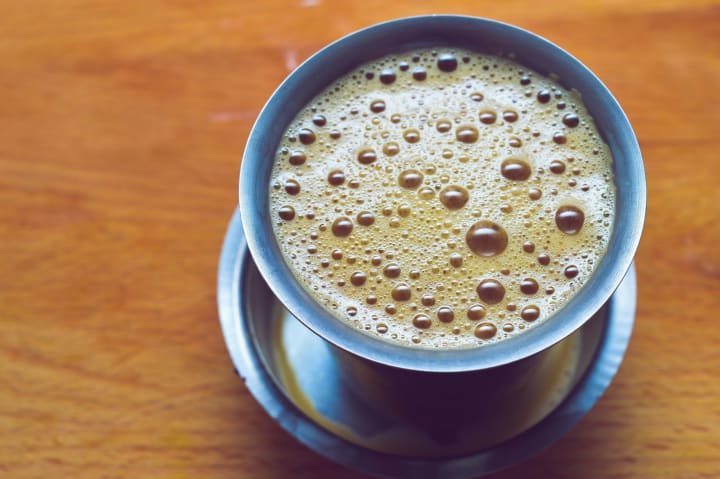
A traditional South Indian filter (a steel set some families call a "channi", served in a davara and tumbler) uses gravity, not pressure, to slowly draw hot water through finely ground coffee. It produces a strong, concentrated decoction that is meant to be mixed with hot milk, not drunk straight. Made well, it is the most comforting cup in India: thick, sweet, a little bitter, and frothy on top.
What you need
- A South Indian coffee filter (the two-chamber steel kind, with a perforated upper chamber, a press disc and a lid)
- Finely ground coffee
- Water just off the boil
- Milk, and sugar to taste
- A davara and tumbler to serve (two steel cups work too)
Quick steps
- Add 2 heaped tablespoons (about 20 g) of fine ground coffee to the upper chamber.
- Place the press disc on top and press down gently, just enough to level the bed.
- Pour in about 100 ml of hot water, just off the boil, filling the upper chamber.
- Close the lid and leave it for fifteen to thirty minutes while the decoction drips through.
- Mix 2 to 3 tablespoons of decoction with about 150 ml of hot milk and sugar to taste.
- Pour between the davara and tumbler a few times to froth it and bring it to drinking temperature.
How much coffee and water to use
- Serves: 1 to 2 cups
- Coffee (fine ground): 2 heaped tablespoons (about 20 g)
- Hot water: about 100 ml
- Decoction you get: about 60 to 70 ml
For each cup, mix 2 to 3 tablespoons (30 to 45 ml) of decoction with about 150 ml of hot milk. Use more decoction for a stronger "strong coffee", or less for a milder, milkier cup.
Step by step
- Grind fine. Use a fine grind, close to espresso consistency. The metal filter has no paper to catch fine particles the way pour over filters do, so a fine, even grind is what slows the water down and builds a strong decoction. Too coarse and the water runs straight through and the decoction tastes thin. If you buy whole beans, grind them just before brewing.
- Fill and press, gently. Fill the upper chamber with grounds and press down gently and evenly with the built in press. Press firmly enough to compact the bed slightly, but not so hard that it packs solid. A solid puck slows the water too much and can stop it dripping at all.
- Add hot water and wait. Pour water just off the boil over the press disc until the chamber is full, put the lid on, and let gravity do the rest. Most filters take fifteen to thirty minutes to drip through, and longer if the coffee is packed tightly. This is not a method for when you're in a hurry, and that slowness is exactly what builds the concentrated flavour. Many households make the decoction first thing in the morning and keep it ready for the day's cups.
- Mix with milk. What collects in the lower chamber is your decoction: strong, dark and almost syrupy. Heat your milk until it's steaming (bring it to a boil if you like it the traditional way), then add the decoction and sugar to the davara.
- The davara and tumbler pour. Pour the coffee from the tumbler into the davara from a height, then back again, three or four times. This mixes in the sugar, builds a light froth and cools the coffee to drinking temperature. Serve in the tumbler, standing in the davara.
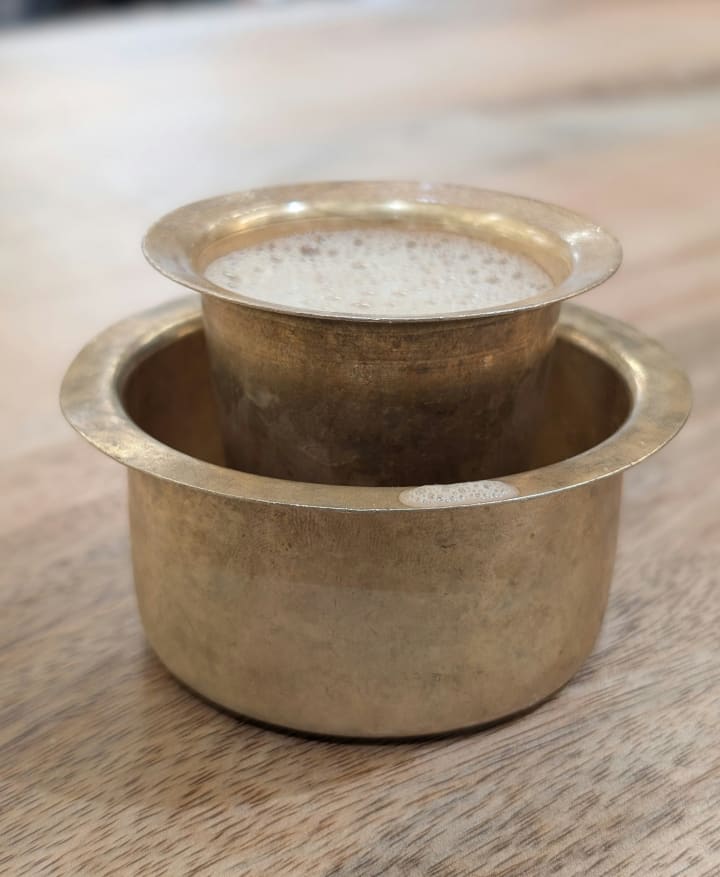
Filter coffee with or without chicory?
Many traditional filter coffee powders blend coffee with roasted chicory root. Chicory gives a darker colour, a thicker body and a pleasant bitterness, and it stretches the coffee further. Pure coffee with no chicory tastes cleaner and lets the character of the beans come through: chocolate, nuts, caramel or fruit, depending on the lot. Both are "proper" filter coffee. It comes down to how you like your cup.
Which coffee to use
For a classic, comforting filter coffee, choose a coffee with chocolate, nutty or caramel notes and a full body. These stand up well to milk and sugar. From our current range, Toasted Walnut, a washed arabica from Baarbara Estate in Chikmagalur with cocoa, dark chocolate, walnut and molasses, is made for it. Choose the South Indian Filter grind. Our fruit forward naturals make a brighter, more unusual filter coffee if you want to experiment.
All Five Roam coffees are 100% coffee, with no chicory.
If you buy your coffee ground, choose the South Indian Filter grind.
Troubleshooting
- The decoction won't drip, or it's very slow: the grind is too fine or the coffee is pressed too hard. Press more lightly next time, or use a slightly coarser grind.
- It drips through in a few minutes and tastes weak: the grind is too coarse, or there isn't enough coffee. Use a finer grind and the full 2 heaped tablespoons.
- It tastes burnt or harsh: the water may be at a hard boil. Let it rest for thirty seconds after boiling before pouring. Also check the roast; a very dark roast can taste harsh.
- Grounds in the cup: the grind is too fine for your filter's holes, or the press disc isn't sitting flat.
Frequently asked questions
How long does filter coffee decoction last?
It tastes best within a few hours. Covered and kept in the fridge, it is fine for a day. Warm it gently with the milk rather than boiling the decoction on its own.
Can I make filter coffee without a filter?
You can get close. Brew fine ground coffee in a French press, or a cloth or paper filter, using the same coffee to water ratio, then mix with hot milk the same way. It won't be quite as thick as a steel filter's slow drip, but it's a good stand in.
What grind size is best for South Indian filter coffee?
Fine or South Indian Filter Grind, close to espresso consistency, but not powdery. If you're buying ground coffee from us, choose the South Indian Filter grind.
Can I use any coffee for filter coffee?
Yes. Medium to dark roasts with chocolate and nutty notes give the most classic taste. Lighter, fruity coffees work too and make a brighter, more modern cup.