
Washed vs Natural Coffee
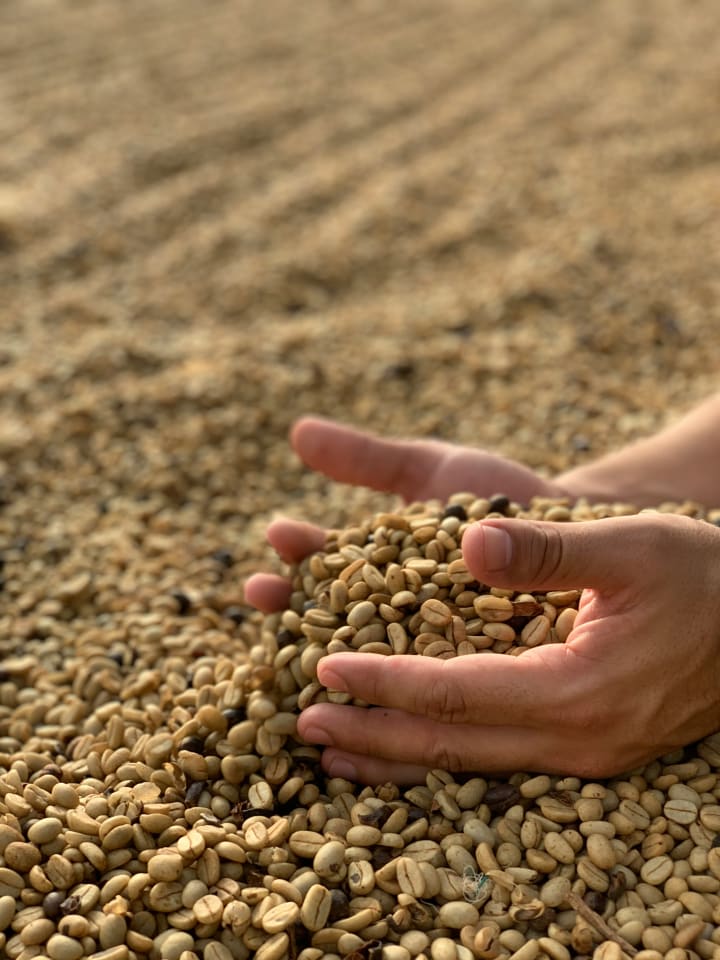
Pick a coffee cherry off the branch and you are holding a fruit. Inside it, usually two seeds, flat sides together. Everything between picking that fruit and shipping those seeds is called processing, and the choice made in the first few hours after harvest shapes the cup as much as the varietal or the altitude does.
There are two classical answers, and a spectrum in between.
Washed: take the fruit off first
In the washed process — wet process, if you read the older books — the cherry goes to a mill within hours of picking. A depulper strips the skin and most of the flesh, leaving the seed wrapped in a layer of sticky sugar called mucilage.
That layer is the problem the process exists to solve. The coffee sits in fermentation tanks, typically twelve to thirty-six hours, while naturally occurring microbes break the mucilage down. It is then washed off in channels or tanks, and the clean parchment-covered seed is dried on patios or raised beds to around 10 to 12 percent moisture.
The result is transparency. With the fruit gone before drying begins, very little of it registers in the cup, and what you taste is the seed itself: the varietal, the soil, the altitude, the care taken picking. Washed coffees tend to read brighter and more articulate, with a defined acidity and a clean finish.
What it costs is water and infrastructure. A wet mill, fermentation tanks and a reliable clean supply are not small things to own, which is part of why washing dominates where investment has followed coffee — Colombia, Kenya, Central America, and most of India''s arabica.
Natural: dry the fruit whole
The natural or dry process is the older of the two by centuries, and the simpler to describe: do not remove the fruit at all. Whole cherries go straight onto patios or raised beds and dry intact — skin, pulp and seed together — for anywhere from two to six weeks. Only once they are dry is the hardened husk hulled away.
While that happens, the seed sits inside a slowly dehydrating, slowly fermenting fruit. Sugars and fruit acids concentrate and interact with the bean, and the cup shows it: heavier body, lower perceived acidity, and an unmistakable fruit character — berry, stone fruit, jam, occasionally something close to wine.
It uses almost no water, which matters enormously in dry origins. What it demands instead is space, reliable weather, and constant labour: the cherries have to be turned and raked, sometimes hourly in the early days, or the pile ferments unevenly and moulds. Natural processing is far less forgiving than washing. Done well it is spectacular; done carelessly it produces the sour, muddy, over-fermented cups that gave the method a poor reputation for most of the twentieth century.
Ethiopia, Yemen and much of Brazil are natural country.
Honey and pulped natural: the middle ground
Between the two sits a family of methods that remove the skin but leave some or all of the mucilage on the seed while it dries. Brazil calls it pulped natural; Central America generally calls it honey, and grades it by how much sugar is left and how slowly it dries — white, yellow, red and black, in ascending order of both.
The cup lands where you would expect: more sweetness and body than a washed coffee, more clarity and structure than a natural. It has become the default for producers who want some of both.
Beyond these, a growing number of producers run controlled fermentations — sealed tanks with the oxygen excluded, sometimes with a specific yeast added. These can be remarkable and can also taste like a science experiment. They are a young field, and the good ones are very good.
Neither is better
This is the part worth being clear about. Washed and natural are not a quality ranking, they are different intentions. A washed coffee asks what this particular seed, from this particular place, tastes like. A natural adds a deliberate second voice — the fruit''s — and the best of them balance the two rather than burying the coffee under jam.
The cupping form does not favour either. Acidity and body are both scored on quality rather than quantity, so a low-acid natural is not penalised for being low-acid, and a light-bodied washed coffee is not marked down for being light. What gets marked down, in both, is a process handled badly.
India does something else as well
Indian coffee carries its own vocabulary here. Washed arabica is traded as Plantation, dry-processed arabica as Cherry, and washed robusta as Parchment — terms you will still see on sacks and price lists.
Then there is Monsooned Malabar, which belongs to neither category. Green coffee is spread in open warehouses on the west coast and deliberately exposed to monsoon winds for several months. The beans swell, pale to a soft gold, and lose almost all their acidity, ending up heavy, mellow and faintly earthy. It is a genuinely Indian invention, born from what used to happen accidentally to coffee during long damp sea voyages to Europe.
On the shelf
Every coffee on this site lists its process on its product page, next to the estate, altitude and varietal for that lot.
If you are working out what you like, the shortest route is to buy one washed and one natural from the same origin and brew them side by side on the same recipe. The difference is not subtle, and once you have tasted it you will read the word on the bag differently forever.