
Arabica vs Robusta
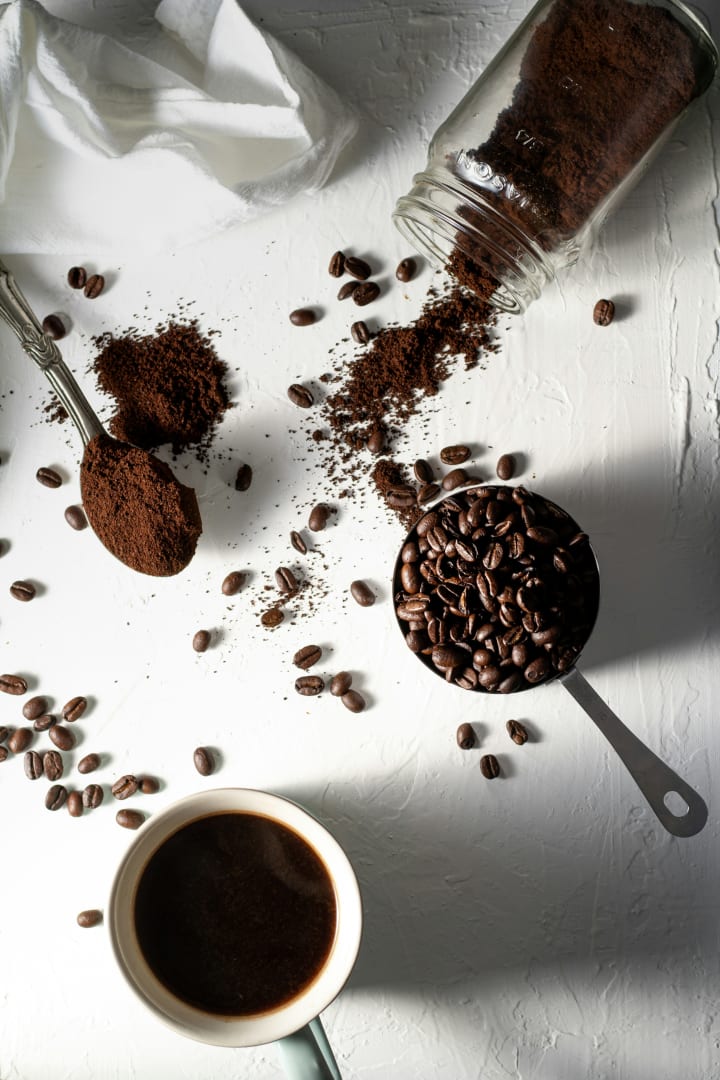
"100% Arabica" is printed on a great deal of ordinary coffee. It is a true statement and an almost useless one: it names the species in the bag, not how well it was grown, graded, or roasted. Both species are worth understanding, because the differences between them are real — they are just not the differences the label is implying.
Two different plants
Arabica is Coffea arabica. Robusta is the common name for Coffea canephora. They are not varieties of one another; they are separate species that diverged long before anyone brewed either.
Arabica is itself a natural hybrid, descended from a cross between canephora and another wild species, Coffea eugenioides. It carries 44 chromosomes to canephora's 22 and pollinates itself, which makes it genetically narrow — most of the arabica grown worldwide traces back to a very small founding population. That narrowness is exactly why it is so vulnerable to disease.
Where each one will grow
Arabica wants altitude and cool air: roughly 900 to 2,000 metres in the tropics, around 15 to 24°C, with a real dry season. It is slow, fussy, and easily hurt — coffee leaf rust and the coffee berry borer have both rewritten the map of where it can be farmed.
Robusta earns its name. It grows from near sea level to about 800 metres, tolerates 24 to 30°C and heavier rain, resists the diseases that flatten arabica, and yields substantially more fruit per hectare. That combination — hardier plant, bigger crop, easier ground — is why robusta is cheaper, and it is most of what the price difference actually reflects.
Arabica is a little under two-thirds of world production; robusta is most of the rest, and its share has been climbing as the climate makes arabica ground harder to farm.
What is actually in the bean
The cup differences follow from chemistry that is easy to measure.
Robusta carries roughly twice the caffeine — about 2.2 to 2.7 percent of the bean by weight against arabica's 1.2 to 1.5. Caffeine is a natural insecticide, which is part of how the plant defends itself. Robusta also carries more chlorogenic acids, which read on the palate as bitterness and a drying astringency.
Arabica goes the other way: appreciably more lipids and nearly twice the sugar. Those are what aroma and sweetness are built from during roasting, and they are the reason a good arabica can taste of fruit or flowers at all.
How they taste
Arabica, grown and processed well, gives you acidity, aromatic complexity, and sweetness — the fruit, floral and caramel notes that a cupping score is largely rewarding.
Robusta gives you body, low acidity, and a heavier, more savoury, sometimes grainy or woody character, with more bitterness behind it. It also produces noticeably more crema under espresso pressure, which is why a good many traditional Italian espresso blends have always included some, and why an all-arabica espresso can look thin next to one that does not.
Robusta deserves better than its reputation
Most robusta tastes poor because most robusta is grown for volume and processed carelessly, not because the species cannot be good. Grown at the top of its range, picked ripe and washed properly, it makes a genuinely fine cup — dense, sweet, and nothing like the harsh instant coffee that shaped its reputation.
The trade recognises this: the Coffee Quality Institute maintains a Fine Robusta standard with its own cupping protocol, separate from the arabica scale. India is one of the origins doing the most serious work under it, which matters here — around 70 percent of what India grows is robusta.
What this means when you are buying
Treat the species as a starting point, not a grade. A carelessly grown arabica is a worse cup than a carefully grown robusta, and no amount of "100% Arabica" on the front of a pack changes that.
What tells you something is the same as ever: a cupping score, a lot record naming the estate and how the coffee was processed, and a roast date. Each of our coffees lists its varietal alongside those on its product page — so you can see what you are buying rather than infer it from a species name.