
Cappuccino
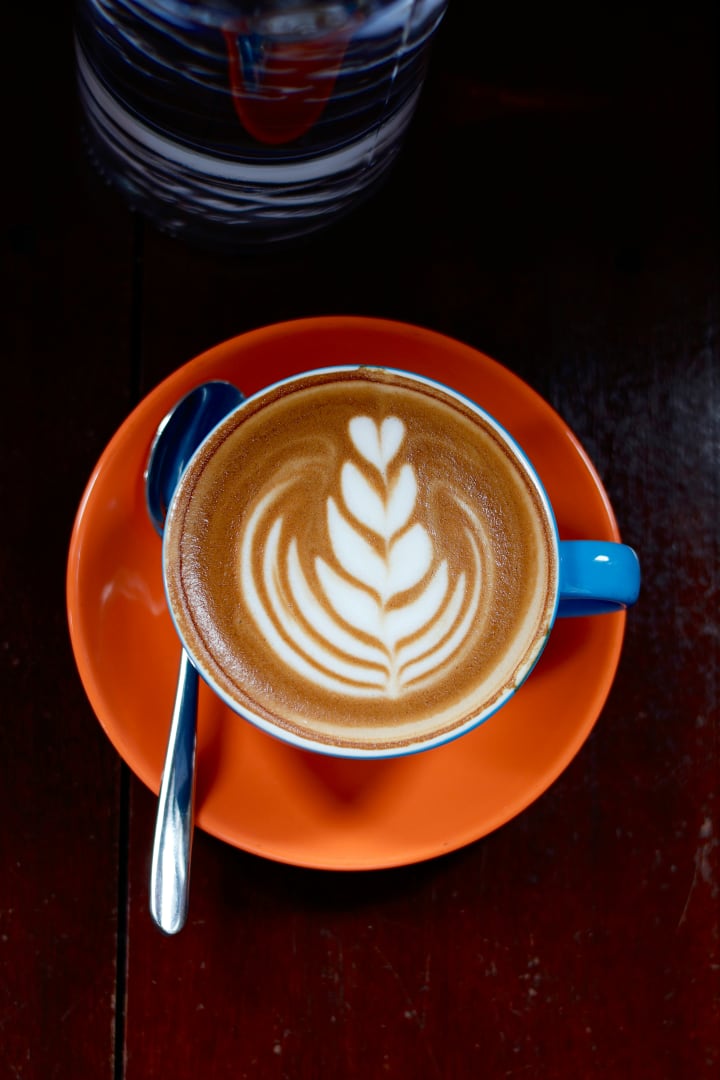
The cappuccino is one of the few coffee drinks with an actual published definition. The Specialty Coffee Association describes it as a 150–180 ml (5–6 oz) coffee and milk beverage balancing rich sweet milk against espresso, built in three equal parts: espresso, steamed milk, and dense foam.
That last third is what makes it a cappuccino rather than a small latte.
What you need
- A double shot of espresso — 18 g of coffee in, 36 g in the cup
- About 120 ml of cold full-fat milk
- A 150–180 ml cup, warmed
How to make it
- Warm the cup. A cappuccino is a small drink and loses heat fast.
- Pull the double shot into the cup.
- Steam the milk with more air than you would for a latte — stretch it until the jug has visibly grown, then spin it smooth.
- Pour from a height at first to hold the foam back and let the milk under it, then drop the jug close to the surface at the end to let the foam out.
- Serve immediately. A cappuccino left standing separates.
The ratio
Equal thirds: roughly 30 ml espresso, 60 ml steamed milk, 60 ml foam. If you are pulling a double, scale the cup up a little rather than cutting the coffee.
The foam should be dense and glossy, not stiff and bubbly. Older recipes describing a spoonful of dry meringue on top are describing a badly made cappuccino.
Dose and yield, so the numbers below are unambiguous
Throughout these recipes, a double shot means 18 g of ground coffee going IN and about 36 g of liquid espresso coming OUT, in 25–30 seconds. That 1:2 ratio by weight is the modern specialty standard, and 18 g is the usual dose for a 58 mm double basket; anywhere from 17 to 20 g in is normal depending on your basket.
The two numbers are different things and it matters: the grams of coffee you grind are not the grams of espresso in the cup. Weigh both if you can.
The traditional Italian figures are smaller. The Istituto Nazionale Espresso Italiano certifies a SINGLE at 7 g ± 0.5 of coffee producing 25 ml ± 2.5 in the cup, in 25 seconds ± 5, at 9 bar and 88°C — so a traditional doppio is around 14 g in rather than 18. Both are correct; they are different traditions, and the modern one is what most specialty cafés and home machines are built around.
Steaming milk, briefly
Whatever the drink, the milk is half the work. Start with cold full-fat milk, keep the steam wand just under the surface until the jug is blood-warm to stretch in air, then submerge it to spin the milk smooth. Stop at 60–65°C. Past about 70°C the lactose stops tasting sweet and starts tasting scalded, and no amount of latte art will get that back.
Common mistakes
- Big bubbles. Air introduced too fast, or the wand left near the surface too long. Tap the jug and swirl before pouring.
- Serving it in a 240 ml cup. That is a latte with a cappuccino's name on it.
- Chocolate on top by default. Traditional in some places, but it covers the coffee. Try it once without.
No espresso machine?
A moka pot or an AeroPress will stand in. Use 60–70 ml of strong moka pot coffee, or an AeroPress brewed short at about 1:5, wherever the recipe says a double shot. It will not be espresso, but it is concentrated enough to hold its own against milk.
Which coffee to use
Anything on our shelf works, but milk drinks reward a coffee with body and sweetness over one built for delicate florals — the milk will bury the top notes either way. Check the tasting notes and the process on each product page; a natural or a honey-processed lot usually cuts through milk better than a light washed one.